Sailgene Technology

 WhatsApp
 service@sailgene.com
Introduction
Long-read single-cell transcriptome sequencing refers to the use of Nanopore sequencing technology to directly read the full-length cDNA reverse-transcribed from single cells processed by 10x Genomics. This process enables the identification and quantification of isoforms within individual cells, as well as the detection of alternative splicing events at the single-cell level. By combining the advantages of single-cell analysis with third-generation long-read sequencing techniques, long-read single-cell transcriptome sequencing elevates single-cell transcriptomic analysis from the gene level to the isoform level.
Applications

Organ/Tissue Cell Atlas

Developmental Biology Research

Discovery of Disease-Relevant Cell Types

Tumor Research
Highlights

Identification of alternative splicing at the single-cell level

Identification of novel isoform at the single-cell level

Quantification of isoform expression at the single-cell level

Identification of more refined cell subtypes
Identification of marker transcripts
Workflow


Suspension QC


Library QC


Data QC


Bioinformatics Analysis
Refer to the demo report
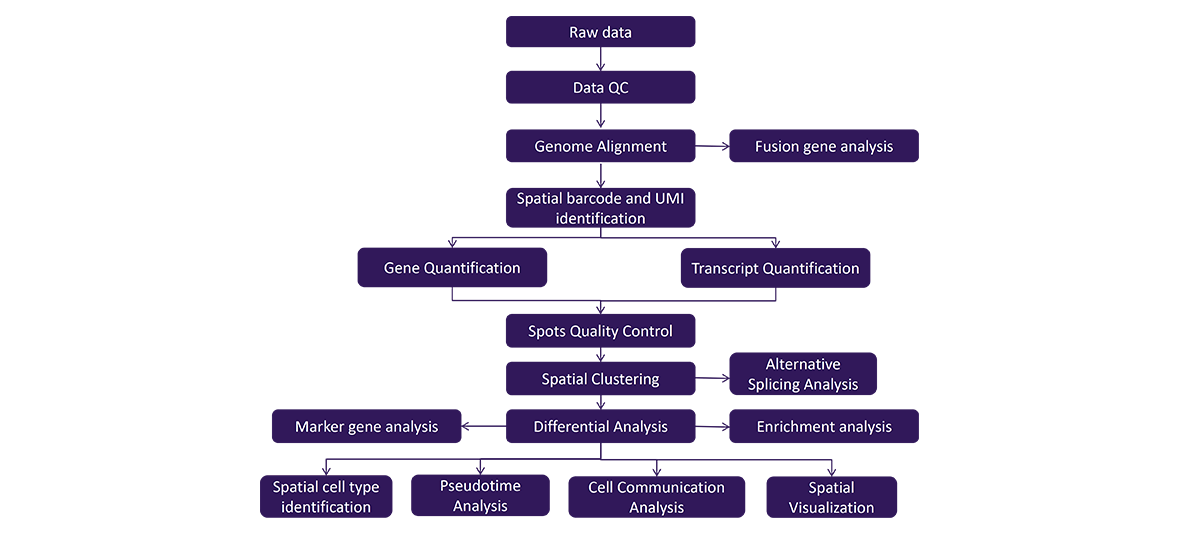
Analysis Workflow
Data Delivery File Formats
Fastq Data Files
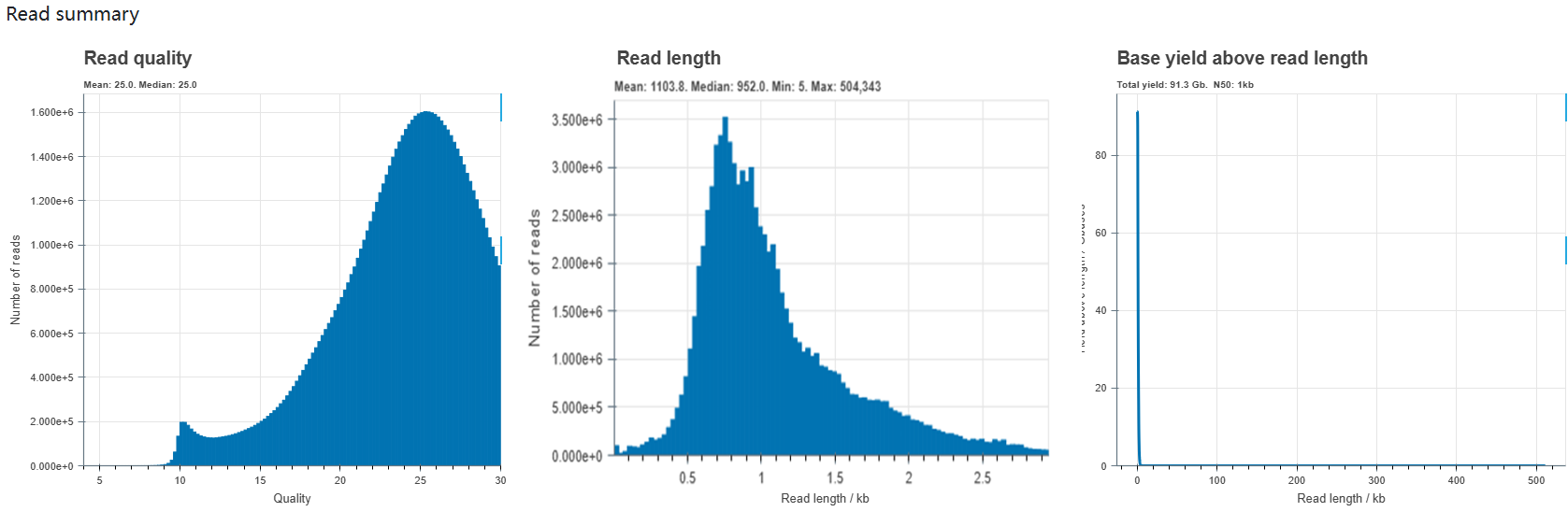
Sequencing Yield Display
Sample Requirements
|
Technical Type |
Sample Type |
Sample Collection |
Transportation |
|
Long-read Single-cell RNA Sequencing |
Animal |
Quantity Requirements: Snap-freeze in liquid nitrogen for 20–30 minutes, then store at -80°C or ship immediately. |
Pack the sorted samples and embed them in dry ice and send it out as soon as possible. Ensure sufficient dry ice is used. |
|
Plants |
Quantity Requirements: 1–2 g |
||
|
Single-cell full length cDNA |
Quantity Requirements: |
Publications
|
Year |
Journal |
Impact Factor |
Title |
|
2025 |
Nature Biotechnology |
41.7 |
Combined single-cell profiling of chromatin–transcriptome and splicing across brain cell types, regions and disease state. |
|
2025 |
Circulation |
38.6 |
Single-Cell Splicing Isoform Atlas of the Adult Human Heart and Heart Failure. |
|
2025 |
Nature Communications |
15.7 |
Isoform characterization of m6A in single cells identifies its role in RNA surveillance. |
|
2025 |
Nature Communications |
15.7 |
Natural killer cells’ functional impairment drives the immune escape of pre-malignant clones in early-stage myelodysplastic syndromes. |
|
2025 |
Protein & Cell |
12.8 |
Systematic characterization of full-length RNA isoforms in human colorectal cancer at single-cell resolution. |
|
2024 |
Nature Neuroscience |
20 |
Single-cell long-read sequencing-based mapping reveals specialized splicing patterns in developing and adult mouse and human brain. |
What's the best choice?
| Long-read Single-Cell Transcriptome Sequencing |
Single-cell transcriptome sequencing |
|
| Sequencing Technology | Nanopore PromethION | Illumina |
| Reads Length | Reads N50:~1kb | 150bp |
| Delivery File Format | Fastq | Fastq |
| Analyze Content |
1.Gene expression, cell clustering, cell annotation 2.Identification of isoform diversity 3.Isoform quantification 4.Differential transcript analysis for cell clustering 5.Comparison of gene clustering results with isoform clustering results 6.Identification of cell subpopulations through differential alternativesplicing 7.Isoform switching between cell populations 8.Identification of fusion genes in cell clusters 9.Identification of IncRNAs in cell clusters |
1.Gene expression,cell clustering,cell annotation |
Keyword:
Long-read Single-Cell Transcriptome Sequencing
Contact Us
If you are interested in our long-read sequencing services or potential collaboration, please contact us. Our team is ready to support your research with tailored solutions. We also welcome feedback from users to help us improve our services.

Contact Us
Add: One Innovation Drive, Suite B3-406, Worcester, MA 01605, USA
在线客服添加返回顶部
右侧在线客服样式 1,2,3 1
图片alt标题设置: SAILGENE TECHNOLOGY INC.
表单验证提示文本: Content cannot be empty!
循环体没有内容时: Sorry,no matching items were found.
CSS / JS 文件放置地